Destination guide
Astove Atoll: Complete Fly Fishing Guide
Everything you need to know before fishing Astove Atoll - GT, permit, bonefish, triggerfish, and what to expect from one of the most remote and extraordinary saltwater destinations on earth.

Steve Raath
8 min

Astove Atoll Fly Fishing - The Complete Guide
Astove Atoll sits roughly 200km south of Alphonse in the outer Seychelles, remote even by the standards of a region defined by its remoteness. It's a small atoll, smaller than most of the Seychelles destinations you'll read about, and it looks the part. Rugged volcanic rock, jagged coral, a gorgeous lagoon, and a wild surf zone that surrounds the whole atoll. This is not a comfortable place. That's entirely the point.
From January to the end of March, Astove opens its doors to a handful of anglers lucky enough to make it out here. The rest of the year, this place is completely untouched. Nobody fishes it. You're casting to giant trevally, permit, triggerfish, and bonefish that have encountered very few fly fishers before you. It's a privilege that's increasingly rare in saltwater fly fishing, and the fishing reflects it.
A wader's paradise. A trophy hunter's dream. And one of the most uniquely challenging fisheries on earth.
The fishery
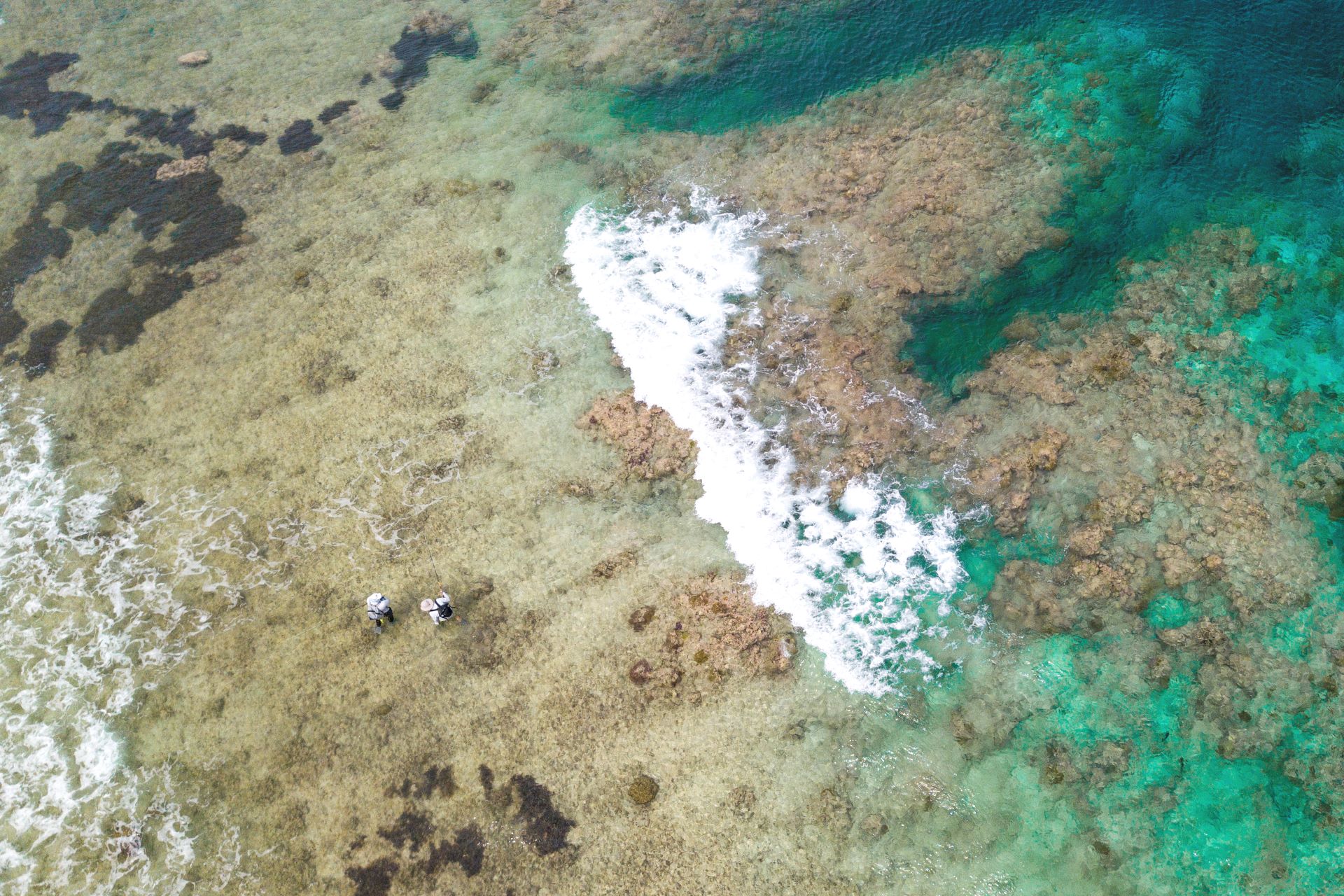
Astove is a circular atoll, surrounded entirely by rugged surf sections. Each section of surf is productive in its own way - bonefish, triggerfish, permit, and GT all move through these zones depending on the tide. The lagoon sits in the center of the atoll, and is a feeding ground for GT, permit, bonefish, as well as many lemon sharks.
What makes Astove genuinely unique in the Seychelles is the opportunity to target bonefish and permit in the surf - as you would for GT and triggerfish on other atolls. This simply doesn't happen anywhere else in the region. Add some of the largest GT in the Seychelles, a healthy triggerfish population that sees almost no pressure, and you start to understand why guides who've fished every outer island keep coming back to Astove.
Giant trevally

GT are the primary target on Astove and for good reason. The average size is extraordinary, the numbers are prolific, and the variety of ways to target them across a variety of tides makes every day on the water different.
Spring tides for GT
Spring tides are widely considered the optimal conditions on Astove, and the day has a rhythm that I came to know intimately over four months guiding and fishing here.
The morning usually starts in the lagoon. We'd pole around depressions and channels, seeking fish making their way toward the mouth on the dropping tide. Don't underestimate what you'll find in there, meter fish are a genuine possibility in the lagoon. These bigger fish are generally free swimmers heading for the exit, so the window is short. Pay attention to the lemon sharks too - bigger GT will often be found sitting on them.

Once the lagoon gets skinny, it's time for lunch and a transfer to a surf zone. We want to be there on the dead low, positioned around depressions near the wall, where the flats drop off into the deep blue. As the tide pushes, GT start making their way onto the flats, often following whip tail rays. Surf walks can easily produce sessions of eight or more fish, but I've consistently found the bigger fish arriving later in the push.
The late push was always the most productive for me as a guide and as an angler. I'd make my way back toward the beach and search for large bait balls near rocky structures. Big GTs would always show up eventually. Patience is everything here. This was the tactic that reliably produced one-meter-plus fish, and it's something I worked out gradually over months of studying how Astove fishes.
Neap tides for GT
Neap tides shift the game entirely. The lagoon is quieter, and the focus moves to the outer flats. On Astove you have access to two skiffs, and long poling sessions across the outer flats are incredibly productive for getting shots at big fish.
One section that stands out is the cliff face on the southern side of the island - a dramatic stretch of rock that's home to thousands of crabs and, consequently often loaded with GT. Poling along the cliffs is always a promising move. The fish averaged 60–80cm in this area, but I was lucky enough to witness individual fish approaching 130cm here. That's a fish you don't forget, whether you catch it or even see it.
Offshore for GT
Off the wall and outside the outer flats is where the offshore GT fishing comes into its own. We'd set up drifts along the wall, throwing poppers and large beast flies, and the results were often extraordinary. Outside the mouth of the lagoon holds giant shoals of GT on the right tide. Arrive at the right moment and you'll raise a fish on almost every cast.
Flies and how to fish
Hollow-tied brush flies are the go-to for GT throughout the Seychelles. Inside the lagoon, where the water is milky, darker colors are essential for visibility. Around the outer flats and in the surf, natural colors work better - tan, white, and a touch of pink.
Strip slowly after a well-placed cast. Wait for the fish to show intent, then speed up the retrieve. The mistake most anglers make is stripping too fast too early. Slow down and let the fish commit.
Permit
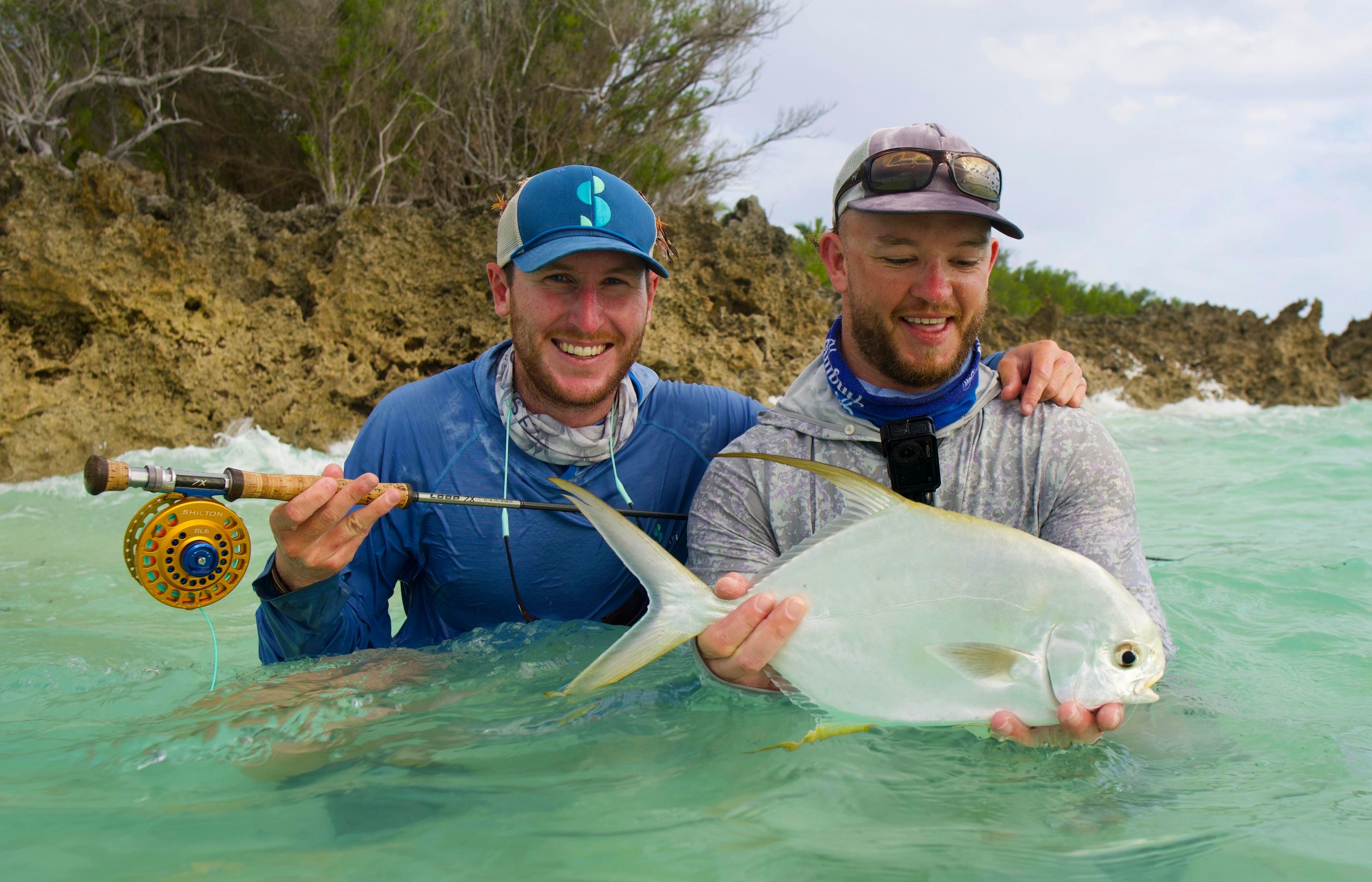
I genuinely believe Astove offers more shots at Indo-Pacific permit than any other atoll in the Seychelles. The combination of the lagoon, the surf, and the outer flats creates multiple distinct opportunities to find these fish throughout the day.
Most fish average around 40cm, but shots at fish over 70cm are available in the surf and these are serious fish in serious conditions.
Spring tides for Permit
The morning dropping tide in the lagoon consistently produces permit feeding off rays. These are lagoon fish - slightly smaller than what you'll find in the surf. Permit are often given away by stingrays, and it can be tough to find free swimmers with the milky water.
Surf walks are one of the most uniquely rewarding ways to target permit that exists anywhere in fly fishing. These fish will often hang around bonefish in the surf, which creates its own challenge, as getting them to eat a fly rather than the nearby bonefish requires precision and patience.
The surf is where you'll find Astove's biggest permit - fish of 65cm and above are regularly spotted and cast at in these conditions. Generally this fish will come on the flats a few hours into the pushing tide. This permit below came in at 68cm right in the surf - an Astove trophy.

Neap tides for Permit
Neap tide permit fishing on the outer flats is genuinely outstanding. Beach walks can produce consistent sessions of three to five fish, mostly around 45cm, in relatively comfortable conditions compared to the surf. If you want shots without the full intensity of surf fishing, this is your window.
Flies and how to fish
Lightly weighted Flexo Crabs are the universal permit fly in the Seychelles. A Flexo with a 3mm tungsten bead sits perfectly in the mid-column, which is exactly where permit eat. Tan is always reliable. Inside the lagoon, darker colours, brown, orange, black, work better in the milky water.
Cast a rod length in front of the fish's face. Long, slow strip. Once the fish shows intent, keep the retrieve steady to maintain interest. The permit eat is extremely soft, any bump, any hesitation - strip set immediately. These fish will spit the fly before you realize what's happened.
Bonefish
I'm convinced the bonefishing on Astove is some of the most exciting in the world. Not the most numerous, but when you factor in the average size of these fish, the terrain they inhabit, and the chaos that follows a hookup in the surf, there is nothing quite like it.
You will lose more tackle to bonefish on Astove than to any other species. Leaders, flies, tippet - the coral around the surf collects it all. The landing rate is genuinely low. That's not a warning off, it's part of the experience.
Lagoon Bonefishing
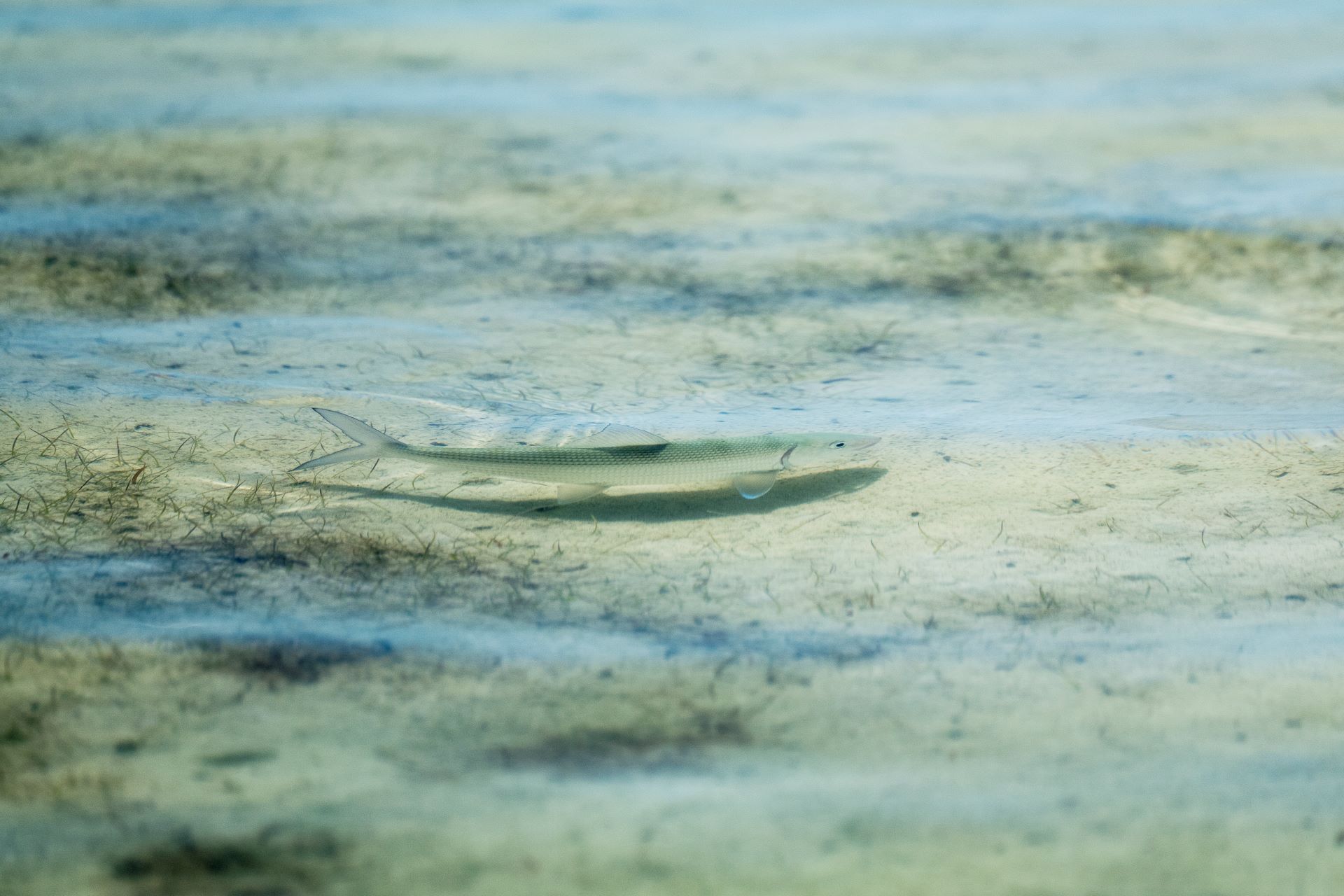
The lagoon holds significant numbers of bonefish, particularly on spring tide mornings. They're smaller than the surf fish, but still exceptional size by global standards and the skinny water sight fishing is deeply satisfying. Neap tide lagoon bonefish are largely residential and available regardless of water level - a great way to keep the rod bent during the neap period.
The surf and outer flats
Ten-pound bonefish are a realistic target on Astove's outer flats and surf zones. These fish are brutal to fight around coral, and your guide will spend the entire battle trying to keep your leader off the bottom. Often it doesn't work. That impossibility is part of what makes landing one so memorable.
These fish are hungry. A well-presented fly gets a reaction. What happens after the eat - the run, the coral, the chaos - is what makes Astove bonefish the stuff of fly fishing legend.
Flies and how to fish
Classic bonefish flies do the job. Inside the lagoon, darker patterns work better in the milky water, same rule as the GT and permit. In the surf, a Flexo is the reliable go-to when fish are being selective. Bring more flies than you think you need. These fish will take them.
Fish Astove bonefish the same way you would anywhere in the Seychelles - slow, long, consistent strips.
Triggerfish
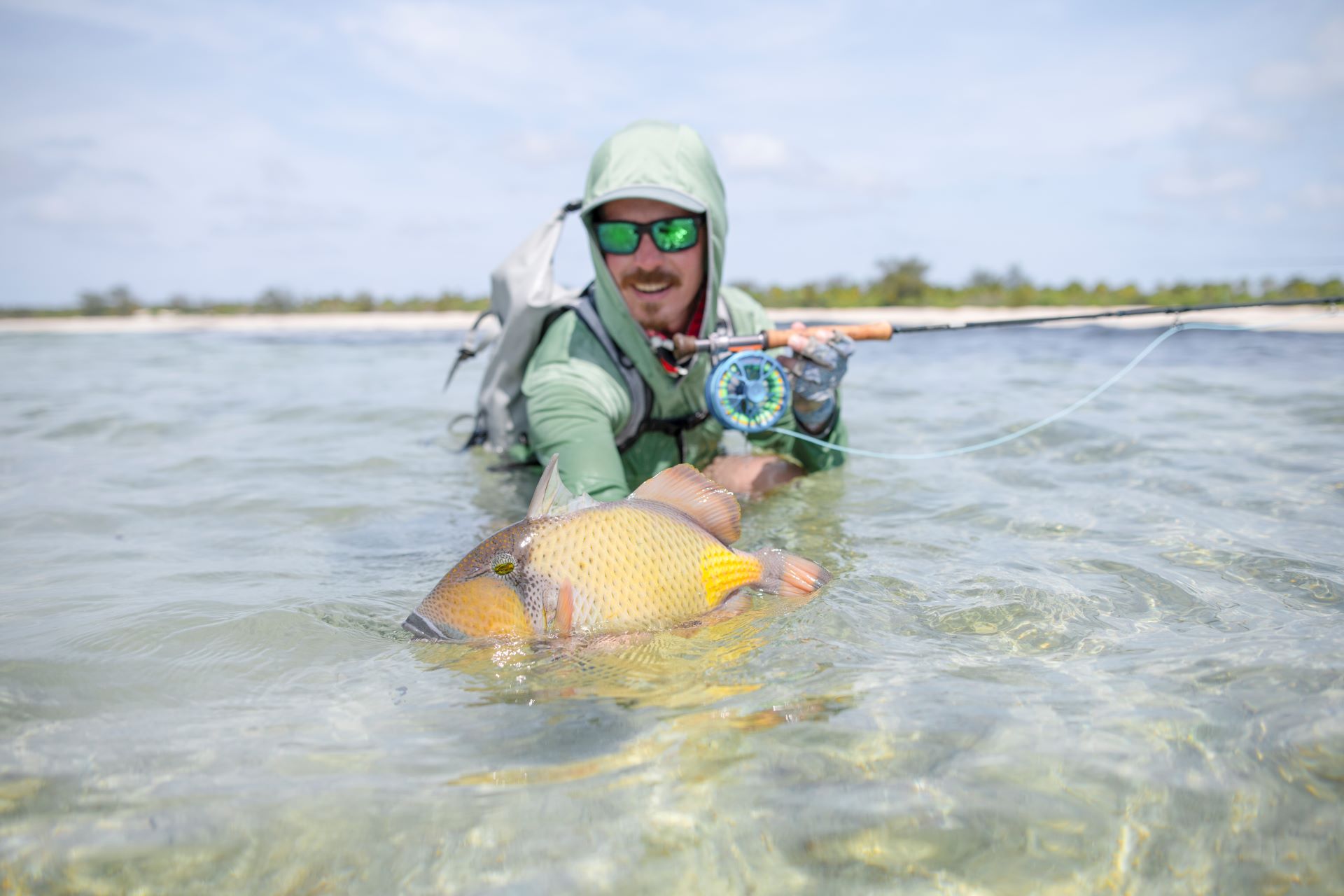
On top of everything else Astove offers, the triggerfish fishing is exceptional. The fish here see almost no pressure, which makes them more willing to eat a well-presented fly than triggers you'll encounter on busier atolls.
Both yellow margin and moustache triggers are found around Astove. You'll get more shots at moustache triggers throughout the day - yellow margins are serious trophies here, and landing one is something to celebrate.
Surf walks
Dead low tide is the best moment for triggers in the surf. Anglers can expect multiple shots throughout the walk well into the pushing tide. The dropping tide can also be productive if the lagoon plan isn’t chosen by your guide in the morning.
Neap tide poling
Poling the outer flats on the skiff near the surf zone is an effective neap tide trigger strategy. Slightly deeper water means slightly less skittish fish - the success rate is often better, and the sight fishing is outstanding.
Flies and how to fish
Heavier crabs are the trigger fly of choice — 3D crab bodies and well-weighted Flexos. Tan and orange is a reliable color combination. Cast one to two rod lengths in front of the fish and let the fly get to the bottom. Long slow strip once the fish can see it. Pause when you get a reaction - give the fish time to properly inhale the fly before doing anything else. Once hooked, your guide will run. Watch and learn.
Milkfish
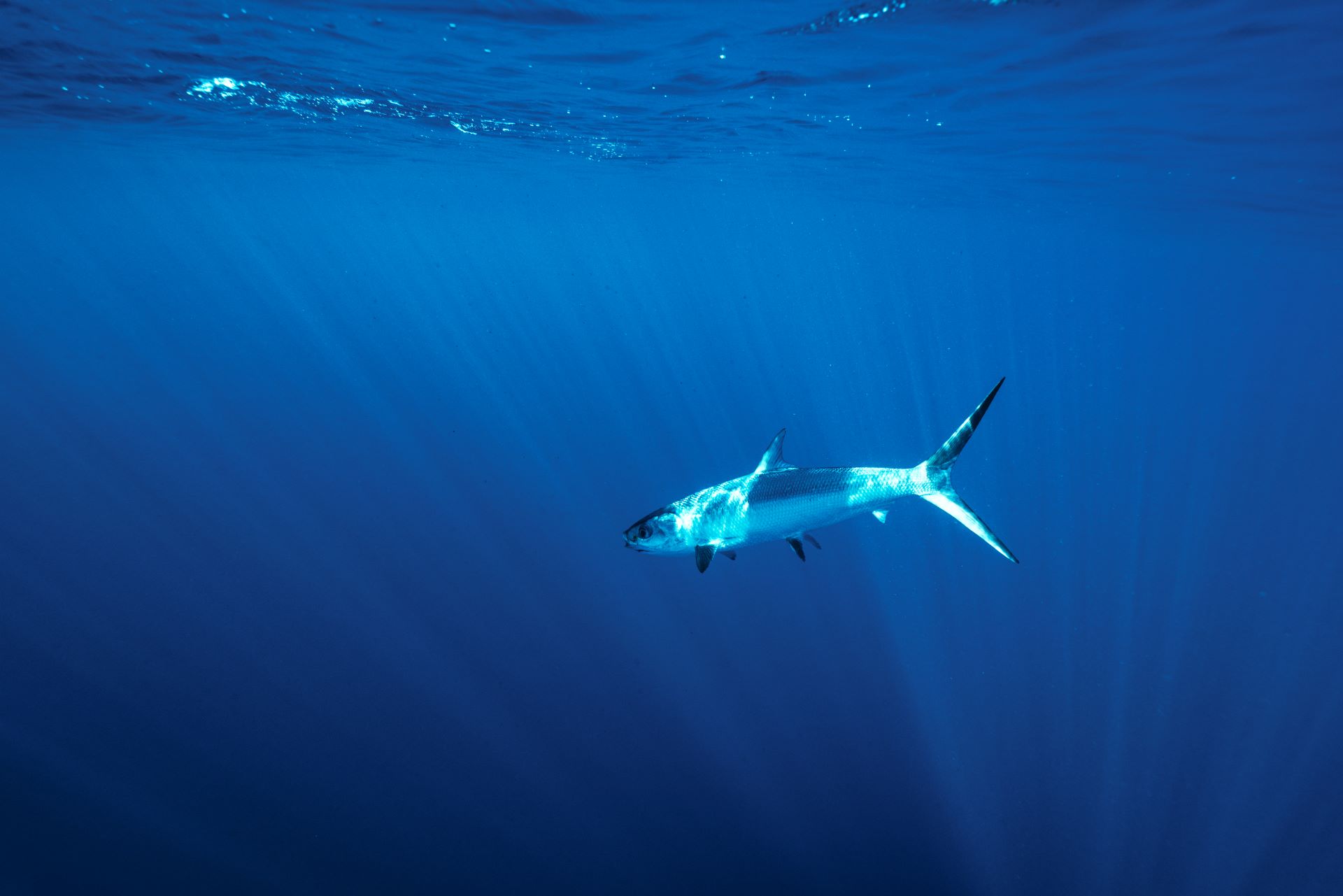
Milkfish are not the primary target on Astove - most of the day is spent wading. But the skiff provides access to offshore zones near the wall where pods of milkfish can be found, and smaller fish are occasionally present in the shallower areas of the lagoon.
When we find them, the approach is the same as everywhere else in the Seychelles. A light algae-imitating fly presented in front of the feeding pod's path. Maintain connection with extremely slow strips. The take is subtle and timing is everything.
Best Time to Fish Astove
Astove is open from January to the end of March - roughly twelve weeks. Outside that window, the atoll is completely unfished and inaccessible. Any week within the season is exceptional. This is not a destination that has better or worse months within its short window - January, February, and March are all outstanding. Pick the dates that work and go.
Getting there
Fly into Mahé, the main island of the Seychelles. From Mahé, a one-hour light aircraft flight takes you to Alphonse Island. From Alphonse, a further two-hour flight transfers you directly to Astove. The lodge coordinates all transfers as part of the weekly schedule. It's a journey - but every extra hour in the air takes you further from everywhere, and closer to one of the most extraordinary fishing destinations on earth.
Rod and gear
Only 2 rods are needed for fishing Astove:
9 weight: Covers bonefish, permit, triggerfish, and milkfish
11/12 weight: Needed for GT
Tropical floating lines only. Large arbor reels with significant backing on everything, these fish run hard and the coral gives them every advantage.
Leaders: 20lb for permit, bonefish, and triggerfish. 150lb for GT. The terrain on Astove demands heavier tippet than you'd use on calmer atolls. Because of the lack of fishing pressure, there’s no need for serious finesse when it comes to tippet selection.
Bring more flies than you think you need.
